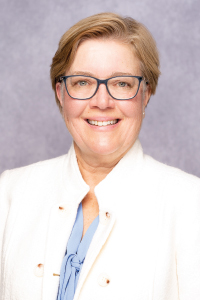
Davidson, Carol
🏛 Incumbent
Carol Davidson is Richmond Hill’s Ward 1 councillor for Oak Ridges. A longtime resident and former CTV journalist, she has also worked in consulting, research, and federal contracts. Her council priorities include growth management, traffic calming, park infrastructure, and resident engagement.
Quick Policy Snapshot
| Gentle Density |
Strongly support city-wide permission
Q
|
|---|---|
| Parking Mandates |
Support reducing mandates only near frequent transit / walkable areas
Q
|
| Transportation |
Somewhat support in selected corridors
Q
|
| Public Safety |
Work more closely with York Regional Police on targeted patrols and crime-prevention information
Q
|
| Cutting Development Charges |
Oppose broad reductions because growth costs must still be paid
Q
|
Detailed Policy Positions
Housing & Growth
Gentle Density
Position: Strongly support city-wide permission
Priority: Medium priority
I support gentle density where it can be accommodated responsibly. Duplexes, additional residential units, garage suites and garden suites can provide more housing choices and help families accommodate aging parents or adult children.
Richmond Hill has already expanded permissions for this type of housing. My priority is to ensure it is implemented with appropriate servicing, safety, infrastructure and environmental protections, including consideration of traffic, drainage and sensitive areas such as the Oak Ridges Moraine.
Growth should provide more housing choices while ensuring neighbourhoods have the infrastructure and services needed to support it.
Small Builders
Position: The City should actively make it easier for small local builders and property owners to create modest housing projects
Priority: Medium priority
Richmond Hill has already taken significant steps to support more small-scale housing, including allowing up to four units on many residential lots, subject to zoning, municipal servicing, building-code and other development requirements.
My focus would be on making sure these policies work effectively in practice for homeowners, local builders and smaller developers. The process should be clear and efficient, while still protecting the standards residents expect.
Small-scale housing can help create more options for families, seniors, renters and people who want to remain in their neighbourhoods as their needs change. At the same time, new housing must be supported by appropriate servicing, infrastructure and emergency access, and must respect safety, environmental and neighbourhood considerations.
The goal should be to make modest housing projects easier to deliver responsibly, without weakening important community protections.
Growth Corridors
Position: Prefer a balanced mix of corridor growth and gentle density
Priority: High priority
Richmond Hill needs a balanced approach to growth. Our Official Plan directs the majority of intensification to centres and corridors, where transit, infrastructure and services can better support higher-density development. I support continuing that approach while also allowing responsible gentle density in established neighbourhoods, including additional residential units, duplexes and other small-scale housing where appropriate standards can be met.
Richmond Hill has already expanded these housing options, providing more choice without relying solely on high-rise development. Growth should be matched with appropriate servicing, transportation, community facilities and environmental protections. The goal should be complete communities with a range of housing choices, while ensuring that the greatest densities are located where the infrastructure exists to support them.
Permit Reform
Position: Support faster permits, but not a fixed one-week target
Priority: High priority
I support making straightforward building permits faster and more predictable, but I would not impose an arbitrary one-week deadline if it could compromise a proper review. Richmond Hill already has service standards for permit applications, including a 10-business-day review commitment for complete house permits.
I would focus on improving processes, reducing unnecessary delays and making requirements clearer for applicants while maintaining building, fire, zoning, drainage and safety standards. Faster approvals are important, particularly for modest housing projects, but speed should come from efficient processes and complete applications rather than reducing the quality of review.
Parking Mandates
Position: Support reducing mandates only near frequent transit / walkable areas
Priority: High priority
I support reducing minimum parking requirements in areas well served by frequent transit and where residents have realistic alternatives to driving. Provincial legislation already limits municipal parking minimums in certain areas around higher-order transit, and Richmond Hill must plan within that framework.
At the same time, many parts of our city remain car-dependent, like Oak Ridges, so a city-wide elimination of parking requirements could create spillover parking and neighbourhood impacts. Parking standards should reflect local conditions, including transit access, walkability, housing type and surrounding neighbourhoods. The goal should be to provide flexibility where lower parking requirements make sense while ensuring adequate parking remains available where residents and businesses continue to rely on vehicles.
Transportation & Streets
Transportation Choices
Position: Somewhat support in selected corridors
Priority: High priority
I support improving walking, cycling, transit and first- and last-mile connections, with decisions based on the needs and conditions of each corridor. I have been advocating for a safe sidewalk and cycling connection on Yonge Street between Silver Maple Road and Old Colony Road/Estate Garden Drive, where pedestrians currently have to use a narrow shoulder. That experience also demonstrates how much transportation planning depends on cooperation with York Region, which controls Yonge Street and many other major roads in Richmond Hill.
In some locations, reallocating road space may make sense to improve safety and connectivity. In others, physical, environmental or traffic constraints may require different solutions. I support practical, evidence-based improvements that make non-driving trips safer while considering traffic, neighbourhood impacts and jurisdictional responsibilities.
Street Safety Design
Position: Strongly support using street design as the main safety tool
Priority: Top priority
Road safety is a top priority for me. My first motion on Council called for Richmond Hill to prioritize quick-build traffic-calming measures in neighbourhoods, and Council unanimously supported it. That work helped move the City toward implementing more physical traffic-calming measures. I believe signs and enforcement have a role, but safer streets also require design that encourages safer driving.
I support measures such as speed cushions, curb extensions, improved pedestrian crossings and other traffic-calming tools where the evidence shows they are needed. These measures should be based on speed, traffic volumes, collision history and pedestrian activity, while also considering emergency access, transit and neighbourhood impacts. The goal is safer streets for everyone, particularly in residential areas and near schools, parks and other high-pedestrian locations.
Downtown & Main Street
Position: Support both equally
Priority: High priority
I support a balanced approach to economic development. Richmond Hill should continue strengthening walkable centres and main-street areas, including downtown and Oak Ridges, where local businesses, services and mixed-use development can contribute to vibrant complete communities. At the same time, larger employment and destination projects also play an important role in creating jobs, attracting investment and strengthening the City’s tax base.
Our Official Plan recognizes that different parts of Richmond Hill serve different economic functions, from Richmond Hill Centre and local centres to employment areas. I do not think we should choose one model at the expense of the other. The priority should be supporting the right type of development in the right location, with appropriate transportation, infrastructure and community amenities.
Public Safety
Public Safety
Position: Work more closely with York Regional Police on targeted patrols and crime-prevention information
Priority: Top priority
Public safety is a top priority for me. While policing is a York Region responsibility, Richmond Hill has an important role in working closely with York Regional Police and responding to neighbourhood concerns. I have worked directly with YRP on resident safety issues, including hosting community safety nights, and I regularly share crime-prevention and safety information through my weekly e-newsletter. When residents contact me about specific concerns, I work with YRP and City staff to seek additional patrols where appropriate and to address City-controlled issues such as broken street lighting.
I have also explored opportunities to establish neighbourhood watch initiatives in Oak Ridges. These programs depend on sustained resident participation, and while there has been interest, we have not yet had enough ongoing involvement to establish a lasting program. I remain open to supporting neighbourhood-based safety initiatives where residents want to participate.
Effective public safety requires strong cooperation between police, the City and residents, along with prevention, good communication and prompt action on neighbourhood concerns.
CCTV Cameras
Position: Support targeted cameras in high-risk locations with strict privacy rules
Priority: High priority
I support targeted use of public safety cameras where crime data and demonstrated community-safety concerns show they can be effective, with strong privacy protections and oversight. In 2026, I supported funding additional CCTV cameras in Richmond Hill, with locations determined by York Regional Police based on crime data and public-safety priorities.
These cameras should focus on public spaces, protect the privacy of private homes and have clear rules governing access and retention of footage. CCTV can help police investigate crimes and identify stolen vehicles, but it should complement, not replace, frontline policing, prevention, good lighting and strong communication with residents. I support using technology where there is evidence it can improve safety, while maintaining appropriate safeguards for privacy and accountability.
Money & Services
Funding Growth
Position: Use a mix of taxes, fees, and development charges
Priority: Top priority
Funding growth responsibly is a top priority for me. Richmond Hill needs a balanced approach using taxes, user fees, development charges and senior-government funding, rather than placing the full cost of growth on existing taxpayers. Development charges are an important tool for funding growth-related roads, parks and community infrastructure.
I have consistently supported protecting that principle, including voting against the 40-year development charge deferral and the Development Charge Reduction Program. At the same time, we must properly fund the repair and replacement of existing infrastructure, maintain healthy reserves and pursue senior-government funding wherever available.
Growth should contribute fairly to the infrastructure it requires, while the City continues to plan responsibly for the long-term needs of existing residents.
Cutting Development Charges
Position: Oppose broad reductions because growth costs must still be paid
Priority: Top priority
Development charges help pay for the roads, parks, recreation facilities and other infrastructure required by growth. I do not support broad reductions or waivers unless there is a clear plan to replace the lost revenue without shifting those costs onto existing taxpayers.
I voted against Richmond Hill’s participation in the 2026 Development Charge Reduction Program, which proposed a 50% reduction for residential development, and I opposed a proposed 40-year City development-charge deferral.
I support targeted incentives where there is a demonstrated public benefit, particularly for genuinely affordable or non-profit housing, but they must be financially responsible and transparent. Housing affordability is important, but reducing development charges does not eliminate infrastructure costs. Someone still has to pay for the services that growth requires.
Public Spaces & Environment
Public Spaces
Position: Strongly support making this a core budget priority
Priority: High priority
Parks, libraries, community centres, public spaces and the urban tree canopy are core infrastructure that contribute directly to quality of life and strong neighbourhoods. As Richmond Hill grows, we need to maintain existing facilities while planning for new amenities where growth creates additional demand.
In Oak Ridges, one challenge is that many newer neighbourhoods remain unassumed, which can limit the City’s ability to move ahead with some improvements until developers complete their obligations and the City assumes the infrastructure. I continue to advocate for progress wherever possible while working with staff and developers to address those delays.
These investments should be planned responsibly through the capital budget, with attention to lifecycle costs and opportunities for grants and partnerships. Complete communities require roads and utilities, but also parks, trees, recreation, libraries and places where residents can connect.
Environment & Resilience
Position: Strongly support stronger action and dedicated funding
Priority: Top priority
Protecting Richmond Hill’s natural environment and preparing for more extreme weather are top priorities for me. Tree canopy, shade, stormwater infrastructure and green infrastructure are not simply environmental amenities. They help reduce flooding, manage heat, protect water quality and make neighbourhoods more resilient. Richmond Hill already has plans for its urban forest and stormwater system, and I support dedicated, long-term funding to implement them responsibly.
I have also advocated for measures to reduce road-salt pollution and protect environmentally sensitive areas, including the Oak Ridges Moraine and Bond Lake. As our city grows, climate resilience needs to be built into infrastructure planning, development and asset management so we are protecting both residents and the environment for the long term.
Transparency & Engagement
Transparency & Engagement
Position: Strongly support more plain-language disclosure and voting records
Priority: Top priority
Transparency and accountability are top priorities for me. Residents should be able to easily understand what Council is deciding, how members voted and what the financial and community impacts of major decisions may be. Richmond Hill already publishes agendas, staff reports, minutes and meeting recordings, but finding and interpreting that information can still be difficult.
Throughout my term, I have tried to make municipal decisions more accessible by regularly explaining Council issues, development proposals and opportunities for public input through my weekly Oak Ridges Wrap Up e-newsletter and other community updates. I support clearer plain-language summaries, easily accessible voting records and better public information about major projects and development decisions, while respecting legal and confidentiality requirements where they legitimately apply.