Four years ago, Richmond Hill embraced the idea of becoming a Compassionate Community. Later that year, at their inaugural meeting, members of Council signed a pledge committing themselves to inclusion, compassion and respect for diverse voices.
On Monday, as the same nine elected officials were preparing to begin another term, Richmond Hill faced an opportunity to demonstrate what those commitments meant in practice.
The opening of The Cove, the Krasman Centre's relocated drop-in program near Leslie Street and 16th Avenue, was temporarily postponed following opposition from some residents.
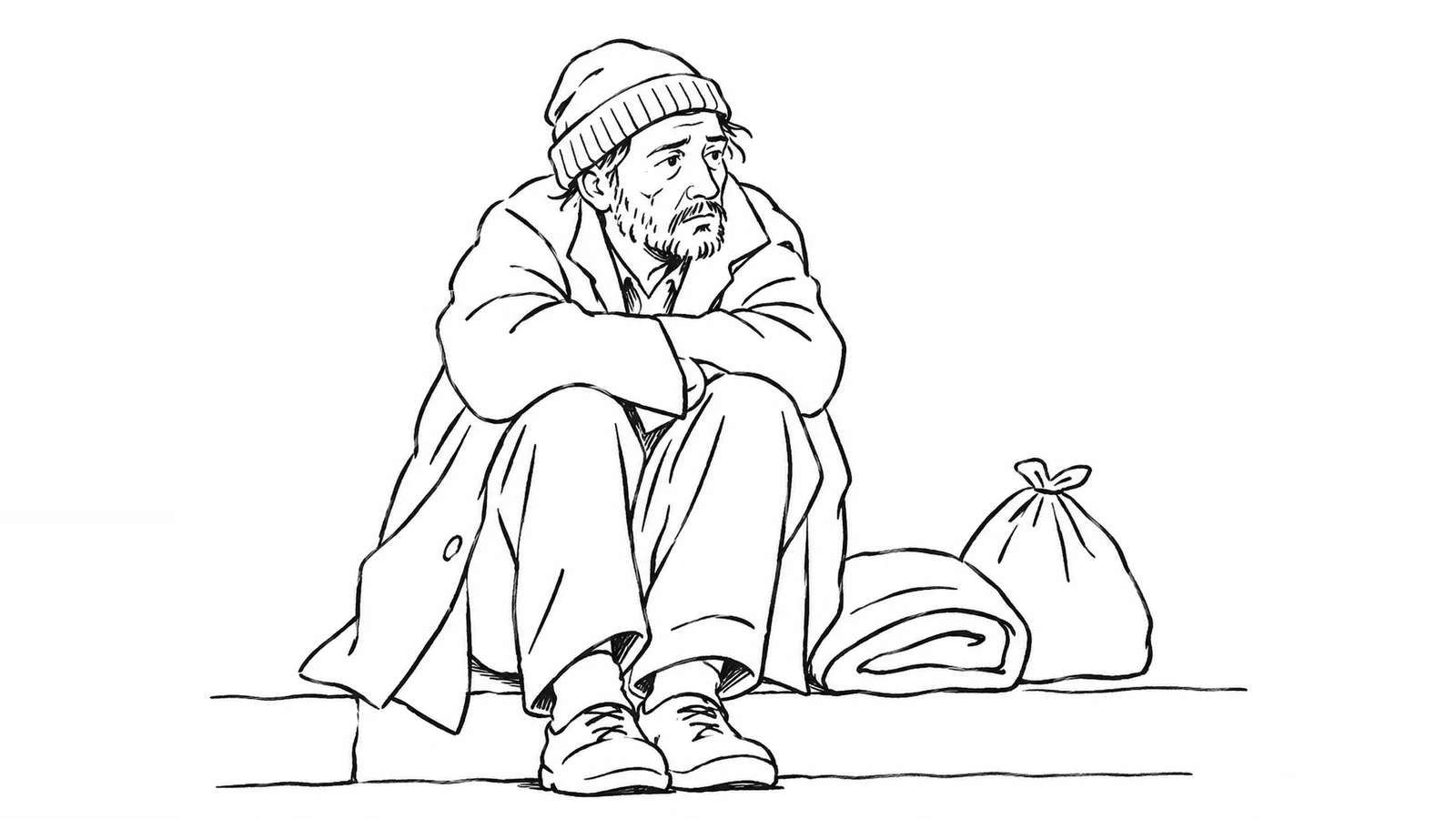
It is worth remembering what The Cove actually is. It is neither an overnight shelter nor a supervised drug consumption facility. It is a daytime support centre providing meals, peer support and assistance to people experiencing mental health, addiction or housing challenges.
Residents have every right to raise concerns about their neighbourhoods. But the people who rely on these services are also members of our community. Their safety, dignity and well-being deserve no less consideration.
Perhaps among those who so passionately opposed the centre were homeowners concerned about protecting their property values. Their homes may represent their largest financial asset, some having doubled or even tripled in value over the years.
But have we ever stopped to consider the other side of that prosperity?
The very housing market that has made many of us considerably wealthier has pushed others into poverty and housing insecurity. While some celebrated the growing equity in their homes, others watched their rents become unaffordable, their savings disappear and their mental health deteriorate.
What appears on one household's balance sheet as accumulated wealth can be reflected in another household's life as mounting hardship.
Research by the Canadian Alliance to End Homelessness, examining 36 Canadian communities, reinforces the connection between the declining availability of affordable rental housing and rising homelessness.
There is something deeply troubling about a community that celebrates the rising value of its homes but struggles to make room for those who can no longer afford one.
And now, when some of those left behind seek a place to receive a warm meal, find companionship or rebuild their lives, even that modest space becomes a subject of opposition.
Those who protested may not represent the majority of Richmond Hill residents. We should not assume that their voices speak for an entire community. Yet the fact that we have reached a point where providing basic support and human dignity to our most vulnerable neighbours has become a matter of organized opposition should give us all reason to reflect.
How far have we drifted from the values we so proudly proclaimed? And how much further must we drift before we begin to question not just our policies, but our priorities as a community?
Consider another troubling contradiction. According to the organizers, more than 6,200 people have signed a petition opposing The Cove's relocation, citing concerns about neighbourhood safety. Meanwhile, in recent weeks, pedestrians have suffered serious injuries on our streets, including children, seniors and a crossing guard. Yet when we raise concerns about the design of our streets, we too often encounter indifference, resignation or an attempt to assign blame. How is it that the possibility of danger can mobilize thousands of people, while the reality of danger on our streets fails to generate a comparable sense of urgency? Why are we so passionate about protecting our neighbourhoods from a perceived threat, yet so accepting of the dangers that have already harmed our neighbours? Is compassion becoming selective?
Many of us gather in places of worship every week, listening to teachings about kindness, generosity and compassion. Jesus taught his followers to feed the hungry, welcome the stranger and care for those in need. Similar teachings are found across other faiths.
But what becomes of those teachings when the hungry, the struggling and the forgotten become our neighbours?
Does our compassion end where our property lines begin?
Surely, compassion is not something we practise only within the walls of our places of worship. Its true meaning is revealed in how we treat our fellow human beings outside those walls.
A community is defined not by the values it declares, but by the choices it makes. Those choices are reflected in how we treat our most vulnerable neighbours, what conduct we accept from our elected representatives, and what we are prepared to overlook when our own interests are at stake.
The words spoken at an inauguration ceremony may be beautiful. But the value of a public commitment lies not in the solemnity with which it is made, but in the conduct that follows. Without that, even the most noble words become ceremonial decoration.
Surely, the measure of Richmond Hill's prosperity cannot simply be the market value of its homes. It must also be the dignity with which we treat those who have lost theirs.
Compassion is easy to endorse at a ceremony. It is considerably harder to practise when it requires something of us.
That is precisely when it matters most.